SPHERE Investments

Evidence-Based Healthcare Investing

Real estate, operations, analytics, and strategic capital to enhance public health.

Language EN FR IT ES DE
SPHERE healthcare infrastructure
Healthcare delivery is changing

Infrastructure must follow the reorganization of care.

Health systems in high-income and OECD markets are moving from centralized, episodic treatment toward earlier, continuous, preventive, predictive and community-based care. The result is a new infrastructure thesis: care must be closer to need, better adapted to longitudinal health management, and more specialized where complexity requires it.

Driver 01

Aging + longevity

Aging is no longer only a demographic issue. It is an infrastructure issue: longevity, frailty, cognitive decline and dependency increase demand for senior living, assisted care, memory care, monitoring and recovery-oriented environments.

Sources: U.S. Census / PRB; Eurostat; OECD / UN WPP projection references. Values rounded for presentation use.
65+ population share
US 2025~18%
US 2035~21%
EU 2025~22%
EU 2035~25%
OECD 20501 in 4+
Driver 02

Chronic + behavioral care burden

Chronic disease, multimorbidity and mental health create recurring, long-duration demand across developed health systems. The burden is broad in the U.S., complex among older Europeans, and increasingly behavioral as mental health becomes a structural component of healthcare need.

Sources: CDC chronic disease burden; OECD / Eurostat EU-SILC, Health at a Glance: Europe; OECD mental health. Values rounded for presentation use.
Chronic and behavioral health burden
US 1+ chronic~75%
EU 65+ multimorbidity~43%
OECD mental health1 in 2
Recurring demand increasingly requires prevention, diagnostics, monitoring, mental health access and coordinated care management.
Driver 03

4P medicine

Medicine is shifting from reactive treatment to proactive health management: preventive, predictive, personalized and participatory. Prevention and prediction require earlier detection, more diagnostics, longitudinal data, monitoring and patient engagement outside the hospital.

Framework: P4 medicine / systems-medicine literature and Buck Institute framing.
Reactive careIllness episodes, late intervention, hospital-centered utilization.
Predictive + preventiveEarlier detection, personalized pathways, monitoring and participatory health behavior.
Driver 04

Care continuum reorganization

The continuum is being reorganized around earlier and lifelong health engagement, ambulatory access, chronic and behavioral care management, home and senior care, specialized high-complexity acute settings, and recovery / rehabilitation.

SPHERE synthesis of developed-market care-delivery trends.
Wellnessprevention · screening · longevitylifelong
AmbulatoryASC · MOB · urgent care · diagnosticsdistributed
Chronic / behavioralmanagement · access · coordinationrecurring
Home / seniormonitoring · assistance · livingongoing
Specialized STACHhigh-acuity complex interventionfocused
Recovery / rehabpost-acute · return to functionoutcomes
Consequence for infrastructure Legacy assets were built for episodic capacity. Healthcare real estate is now the physical operating layer of new care-delivery models.
WhereCare moves closer to need: wellness, outpatient, community, home and senior living.
WhyAging, chronic disease, behavioral health, prevention and new care models.
HowThrough purpose-built, adaptive, data-informed infrastructure.
Sector complexity

Healthcare real estate sits at the intersection of multiple systems.

Demand drivers are visible. The discipline lies in understanding the operating variables that shape healthcare infrastructure performance: operator economics, labor, policy, reimbursement, clinical evolution, geography, ownership structure, research and AI development, capital markets, and asset obsolescence.

Operating layerHealthcare infrastructureA physical platform for regulated, labor-intensive, data-enabled care delivery.
Variable 03PolicyHealth-policy priorities, licensing regimes and quality oversight influence access, funding, strategic direction and capacity planning.
Variable 04ReimbursementTariffs, payor mix and payment models shape service economics and operator reinvestment capacity.
Variable 01Operator economicsMargins, utilization, case mix and service-line performance influence reinvestment capacity and asset sustainability.
Variable 02Labor intensityStaffing availability, retention and productivity increasingly define capacity, quality and operating performance.
Variable 08Research + AIClinical innovation, AI-enabled workflows and data infrastructure reshape diagnostics, monitoring, staffing and facility design.
Variable 09Capital marketsEquity, debt and liquidity conditions influence recapitalization, modernization and ownership transitions.
Variable 05Clinical evolutionAmbulatory migration, prevention, behavioral health and chronic-care models change the physical requirements of care.
Variable 06Geography + accessNational averages mislead; healthcare need, capacity, outcomes and provider supply vary materially at the local and regional level.
Market structureOperator-owned inventoryMuch of the sector remains owned and managed by healthcare providers, creating fragmentation and institutionalization potential.
Variable 07Asset obsolescenceLegacy assets often misalign with technology, access, energy, patient flow and new care-delivery requirements.
Why specialization matters

Complexity creates barriers to entry.

Healthcare infrastructure cannot be evaluated through rent, location and lease term alone. It requires a view of the healthcare system around the asset.

Structural proof point

Ownership remains operationally entangled.

Unlike more institutionalized property sectors, healthcare facilities often remain embedded in operator balance sheets, care networks and local delivery systems.

US + EULarge inventory still owner-operated or operator-controlled
BarrierPolicy, regulation, labor, capital and care-model complexity
Investment implication

Specialized platforms can see what generic capital misses.

For SPHERE, system complexity becomes a sourcing, underwriting, modernization and partnership advantage.

ConclusionHealthcare infrastructure cannot be underwritten like conventional real estate.

It operates at the intersection of healthcare delivery, public policy, reimbursement, regulation, labor, operations, research, capital allocation, geography, ownership structure and infrastructure modernization.

Why SPHERE exists

SPHERE was built for the complexity of modern healthcare infrastructure.

Healthcare infrastructure cannot be understood through real estate metrics alone. SPHERE integrates clinical, public-health, operating, demographic, policy and capital-market intelligence into a single evidence-based investment framework.

Foundational thesis

A different asset class requires a different investment platform.

SPHERE emerged from a structural mismatch: healthcare delivery was becoming more distributed, data-driven and operating-intensive while investment frameworks remained largely asset-centric.

Evidence-basedInvestment decisions grounded in healthcare demand, access, outcomes and system data.
Expert-ledPhysician, public-health and operating perspectives embedded into underwriting logic.
Integrated + scalableVertically integrated capabilities designed to scale across assets, operators, geographies and capital solutions.

Platform architecture

From intelligence to execution
Capital allocation
Investment convictionStrategy, market selection, asset selection and capital formation.
Healthcare intelligence
Public health + clinical contextDemand, care pathways, epidemiology, access and policy interpretation.
Analytics layer
Data, mapping and decision toolsGeospatial, demographic, supply, operator and market analytics.
Operating layer
Operators, systems and partnershipsRelationships that inform execution, diligence and asset modernization.
Infrastructure layer
Real assets as care-delivery platformsFacilities adapted to where, how and why care is delivered.
Why it matters

Specialization becomes the underwriting advantage.

Better marketsIdentify where demand, supply, access and demographics create durable need.
Better operatorsEvaluate resilience, care-model fit and partnership potential.
Better assetsUnderwrite adaptability, obsolescence and modernization potential.
Better managementImprove post-acquisition execution, asset operations and strategic repositioning.
Better financial resultsTranslate better selection and management into stronger risk-adjusted performance.
Better outcomes + experienceAlign infrastructure with patient access, quality of care and experience.
SPHEREStrategic Public
Health Equities
and Real Estate
DATA INTELLIGENCE PLATFORM

The intelligence layer informs the full investment lifecycle.

SPHERE’s analytics platform converts research, data and expertise into tools used at each stage of investment execution.

70+Predictive tools
4+TBData under management
140Integrated sources
10Data domains

Four functions across the investment process.

The platform turns healthcare intelligence into repeatable action: it defines where to invest, generates opportunities, disciplines underwriting and supports platform growth.

Function 01Inform strategyIdentify trends early and translate them into market-selection logic.
Function 02Feed pipelineConvert market intelligence into targeted opportunities and relationships.
Function 03Eliminate biasScore assets, benchmark operators and structure auditable underwriting.
Function 04Fuel growthSupport capitalization, strategic counterparties and platform expansion.
Three layers · one investment platform

Integrated, evidence-based operating model.

Layer 01 · Foundation

Evidence + research

4+ TB of healthcare and real estate data from 140 public, private and proprietary sources.

Layer 02 · Team

Team + culture

Physicians, public-health experts, researchers, data scientists, statisticians and investment professionals operate the platform.

Layer 03 · Tools

Decision-support tools

70+ predictive tools analyze trends, model demand, score assets and benchmark operators.
Research informs the tools. The team operates them. The tools translate insight into repeatable investment action.
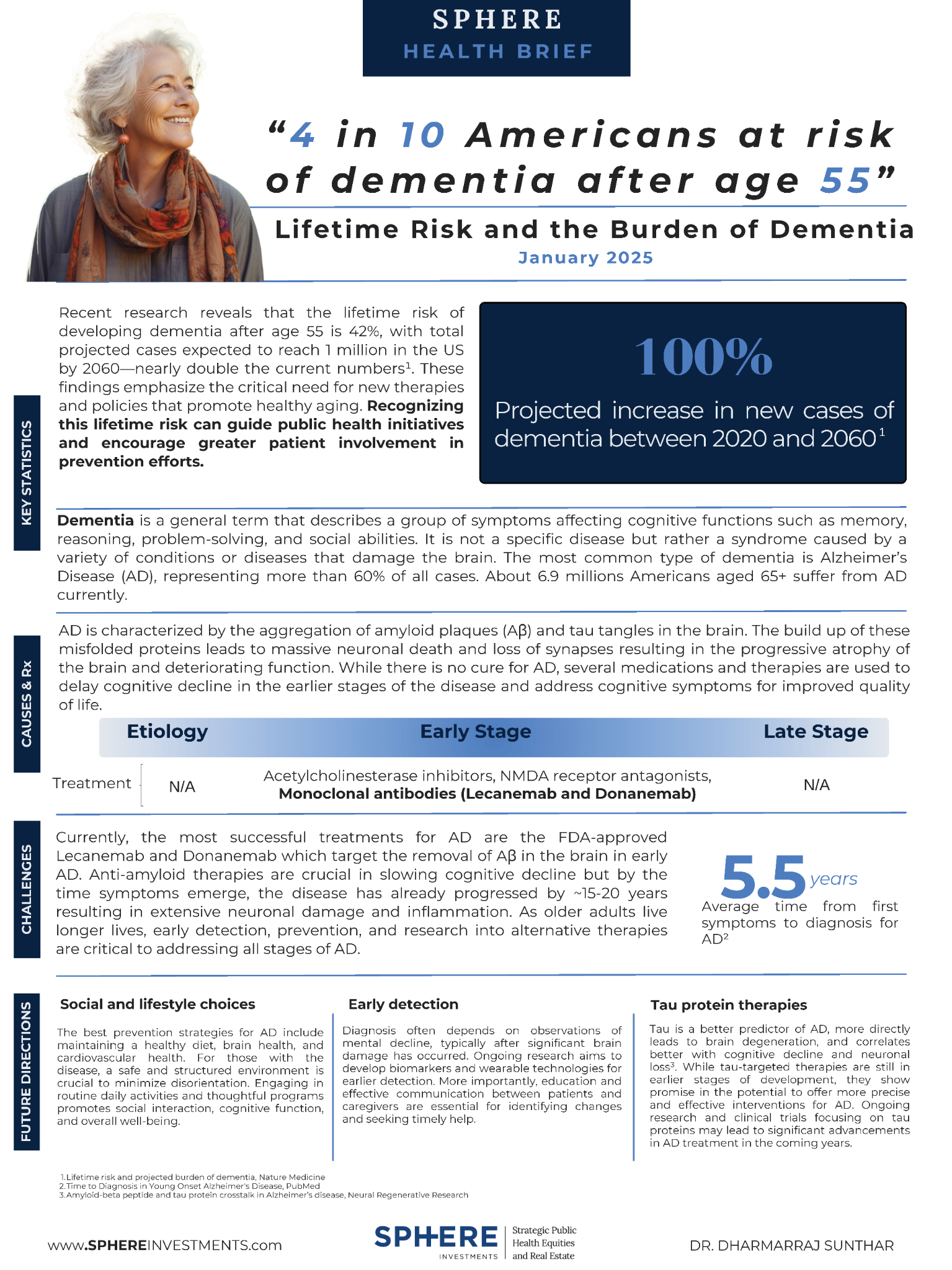
SPHERE Health Brief — lifetime risk and burden of dementia
Research + Market Views

Published research at the intersection of healthcare real estate and public health.

SPHERE produces proprietary research that informs investment strategy, market outlook and public-health interpretation.

Genesis · Scale · Realized Performance

A proven healthcare infrastructure platform.

Two decades of healthcare-focused investing, institutional partnerships, proprietary analytics and realized performance.

Two decades of disciplined evolution.
Strategic pivots that compounded into the current platform
2004

Founded in Miami as Flagler Investments.

2010

Shifted into healthcare real estate to align capital with patient access.

2014

Acquired Prime Healthcare Analytics, adding proprietary intelligence.

2018

Formed partnerships with Investcorp, Fosun-Prudential and Nuveen.

2021

Reached $1B AUM across 39 assets in 15 states.

2024-25

Repositioned as SPHERE and expanded into Europe.

Current platform scale.
Assets under management and development · Nov. 2025
$950MAUM · US + Europe
$250MUnder development
44AUM assets
15U.S. states
Institutional partners
Investcorp
Fosun-Prudential
Nuveen
Leste
Walton StreetInstitutional partner
Realized U.S. track record.
Executed across opportunistic and value-add healthcare vintages
9Realized deals
16Individual assets
$288MTotal realized
~20.8%Weighted realized XIRR
1.82xWeighted multiple
Investment focus follows care-delivery change.
Target infrastructure sectors
Outpatient facilitiesAmbulatory, procedural and physician-led care.
Inpatient facilitiesHigher-complexity interventions and specialty care.
Senior housingLiving, care and longevity infrastructure.
JFK Orthosphere
Oasis Orthopedic Hospital
PAM LTACH Pittsburgh
PAM Round Rock
Strategic intent

Europe: replicating the platform with local depth.

SPHERE’s European expansion is supported by local offices, senior leadership, relationship-driven sourcing and a dedicated data-analytics platform built to replicate the U.S. model across European healthcare infrastructure.

Replication answer Local, data-enabled, relationship-driven and transaction-validated.
European platform footprint

Local offices create execution depth.

Current: Paris, Milan, Madrid and London. Germany is in formation before end-2026.

Local sourcingOperator relationshipsRegulatory knowledgeCross-border underwritingInstitutional capital access
ParisFranceSPHERE Investments SASPartner: Inter Gestion
MilanItalySPHERE Investments SASSPHERE local team
MadridSpainSPHERE Investments EspañaPartner: Simplifika
LondonUnited KingdomSPHERE Investments UKPartner: Melcombe Partners
GermanyIn formationSPHERE Investments GermanyPartner: to be confirmed
European data-analytics platform

European healthcare intelligence platform

A dedicated European HBSA and market-intelligence infrastructure extends SPHERE’s U.S. analytics discipline into NUTS-based European healthcare markets.
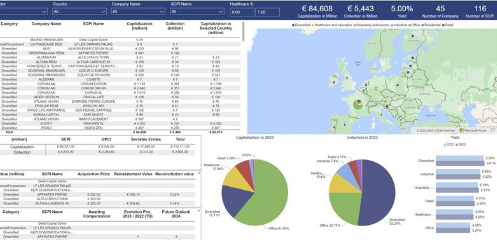
SPHERE European market-ranking and operator benchmarking dashboard
SPHERE Europe analyticsOperator benchmarking, market ranking and country-level pipeline views
Demand / supplyAccess mapping
Asset scoringSenior care, outpatient, inpatient
OperatorsBenchmarking signals
PipelineTransaction analytics
First European transaction

First European transaction validates the platform.

Parkway Life REIT / DomusVi transaction

In December 2024, SPHERE originated and structured Parkway Life REIT’s first European acquisition: 11 French nursing homes from DomusVi for EUR 111.2M, with PAREF Group supporting local execution and ongoing management.

EUR 111.2MTransaction value
11EHPAD facilities
850Beds
12 yrsTriple-net lease
European pipeline indicators
10Active deals
EUR 190M+Pipeline volume
7.1%Average cap rate
24.4 yrsAverage WALT
Source: Parkway Life REIT SGX announcement, Dec. 2024; SPHERE EuroFund Platform & Track Record, June 2026.
CapitalCross-border institutional appetite
OperatorsSale-leaseback readiness
OriginationSector-specialist relationships
Beyond real estate

Beyond real estate: a public-health platform ecosystem.

SPHERE extends its healthcare infrastructure mission into finance, diagnostics, venture-backed innovation and intergenerational community health.
Public-health mindset

From assets to access.

The platform targets the systems around care, not only the buildings: capital access, diagnostic access, scientific innovation and community connection.

FinanceHealthcare credit and equipment-finance infrastructure.
TechnologyDiagnostics, AI and deployment intelligence.
CommunityPrograms that preserve stories and connect generations.
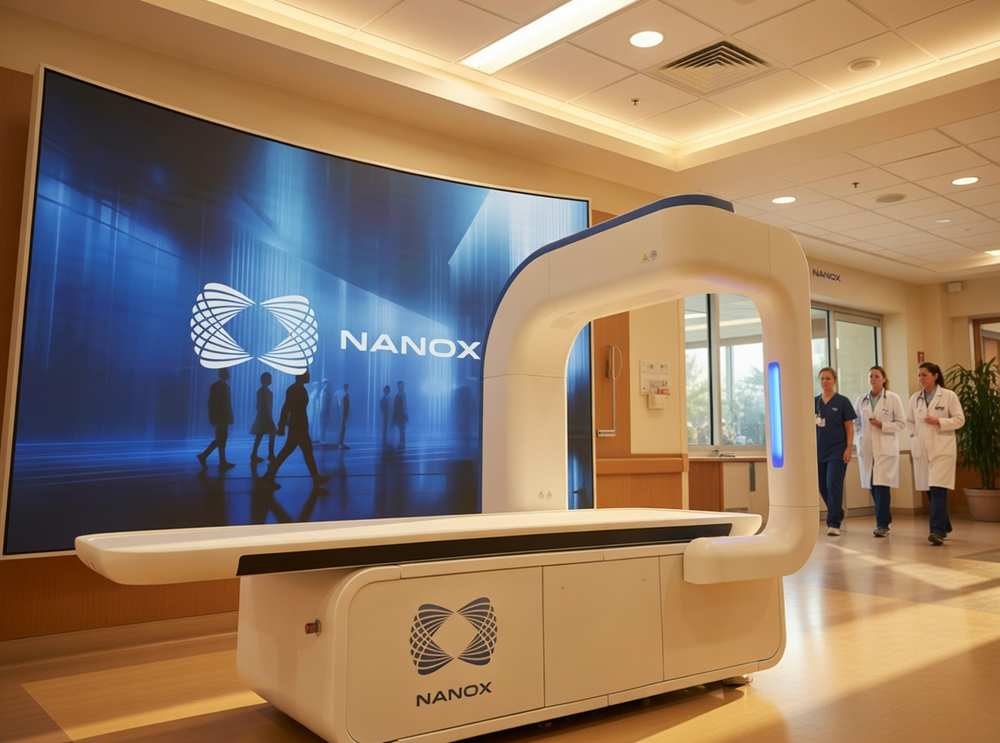
Nanox.ARC imaging system
Nanox logo

Nanox.ARC deployment collaboration

Pairing imaging technology with SPHERE's site intelligence, physician access and healthcare-market relationships.

nanox.vision

Healthcare finance

Embedded credit infrastructure

Precision healthcare finance for providers, equipment and institutional healthcare lending.

finmd.com
Principal-backed VC

Innovation beyond the facility

Selective exposure to companies advancing public health adjacencies.

Frontier Bio logo Rejuvenation Technologies logo TrueAlgae logo
SPHERE Generations community program
Community health

SPHERE Generations

Connecting older adults and underserved youth through shared learning, mentorship and legacy storytelling.

Shared HorizonsLegacy in Print
Team Architecture

A multidisciplinary team built for healthcare infrastructure.

SPHERE combines public health, medicine, investment management, analytics, finance and real estate into one institutional platform.
Global leadership
6 leaders
Didier Choukroun
President & CEO
in
Platform strategy, capital and origination.
Prior: Flagler; PIX; Colliers; Bouygues Immobilier.
Esther Egozi Choukroun
Managing Partner
in
Operations, governance and investment execution.
Prior: Mount Sinai; BNP Paribas; Perfumania.
Hervé Puyplat
Managing Partner
in
Healthcare real estate and operator strategy.
Prior: Vitalia France; Kaufman & Broad.
Eli Karlin
Managing Partner
in
Clinical, operating and investment perspective.
Prior: ACHE; Jackson & Mercy Hospitals.
Maricris Daza
Chief Financial Officer
in
Financial controls, reporting and risk discipline.
Prior: Lloyd Jones; Vie Management; EY.
Haoting Huang
Managing Director, Data Analytics
in
Research infrastructure and market intelligence.
Prior: Jolmo Investment Management.
European leadership
Fabrizio Bonavita
Managing Partner · Head of Europe
in
European platform leadership and capital execution.
Prior: Primonial REIM; SEDCO; AIG; BNP Paribas.
Stefano Ciravegna
Managing Partner, Italy
in
Italian execution and institutional investment.
Prior: AIG; ING Clarion; Sterling; Goldman Sachs.
Lee Mays
Managing Partner, Spain
in
Spanish platform operations and local sourcing.
Prior: Westdeutsche; Hines; Unitaria; Citicorp.
Greg Smith
Managing Partner, UK
in
UK capital, healthcare REIT and real estate strategy.
Prior: Moor Park; Links Healthcare REIT; British Land; Nomura.
Maxime Pain
Director, France
in
Healthcare, hospital and infrastructure execution.
Prior: AP-HP; ElseCare; EIFFAGE; GE Real Estate.

Investing in real estate and private equity to enhance public health.

Miami HQ2 South Biscayne Boulevard, Suite 2000
Miami, Florida 33131 - USA
Paris38 Avenue de l'Opera
Paris, 75002 - France
MadridPaseo de la Castellana, 81
Madrid 28046 - Spain
MilanVia Mascagni 33
Milan, Italy
London20 North Audley Street
London, W1K 6WE
Christus Surgical Hospital
Ortho AZ Surgical Center
Pennington Medical Center
Orthopedic Outpatient Surgical of St. Louis